
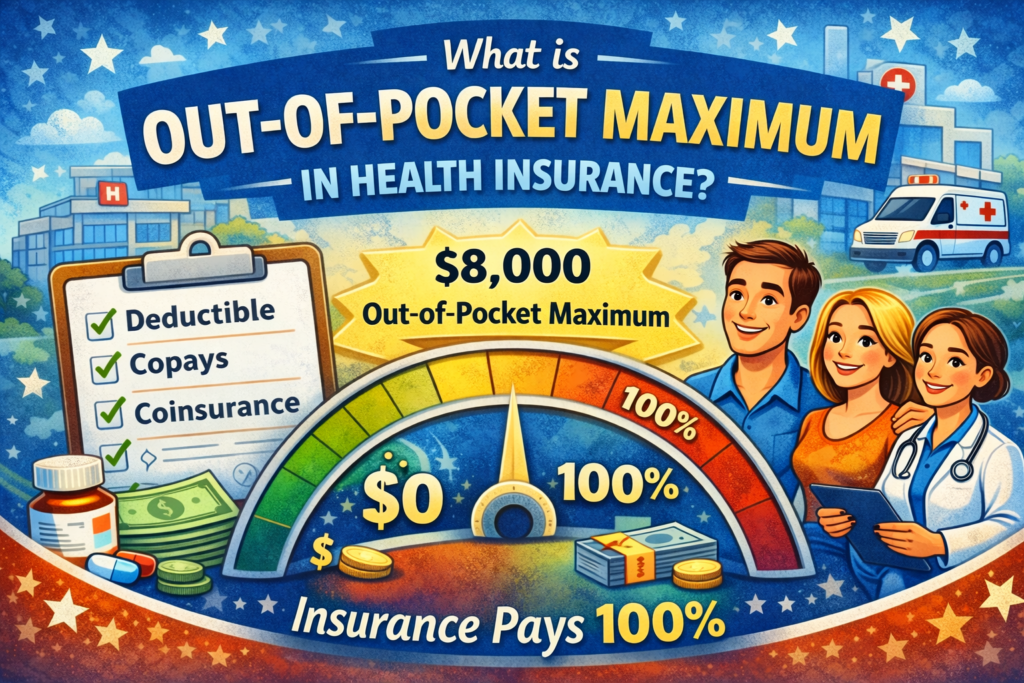
What Is an Out-of-Pocket Maximum in Health Insurance? (Simple Guide for Americans)
Health insurance in the United States comes with a lot of confusing terms—deductible, copay, coinsurance, and one of the most important ones: out-of-pocket maximum.
If you’ve ever worried about how much healthcare could cost in a worst-case scenario, the out-of-pocket maximum is the number you should pay attention to.
In simple terms, the out-of-pocket maximum is the most money you have to pay for covered healthcare services in a year. Once you hit that limit, your insurance company takes over and pays 100% of covered medical costs for the rest of the year.
This rule was strengthened under the Affordable Care Act to protect Americans from extremely high medical bills.
Let’s break it down in plain English so you fully understand how it works.
What Is an Out-of-Pocket Maximum?
An out-of-pocket maximum is the maximum amount you must pay for healthcare services in a policy year before your insurance company pays all remaining covered costs.
This limit includes several types of expenses:
- Deductibles
- Copayments
- Coinsurance
Once you reach the out-of-pocket maximum, your health insurance covers 100% of covered services.
This safety net helps protect patients from massive medical expenses.
Simple Example of an Out-of-Pocket Maximum
Let’s say your health insurance plan has the following:
- Deductible: $1,500
- Coinsurance: 20%
- Out-of-pocket maximum: $7,500
Here’s how it works in real life.
Step 1: Medical Treatment Begins
You receive medical care and pay:
- First $1,500 deductible
Remaining costs are shared through coinsurance.
Step 2: Coinsurance Payments
Suppose you have surgery costing $40,000.
After the deductible:
- You pay 20% coinsurance
- Insurance pays 80%
You continue paying coinsurance until your total healthcare spending reaches $7,500.
Step 3: Maximum Reached
Once you reach $7,500:
- Insurance pays 100% of covered services
- You pay $0 for the rest of the year
Even if medical bills reach $200,000, you won’t pay more than your out-of-pocket maximum.
Pretty powerful protection, right?
What Costs Count Toward the Out-of-Pocket Maximum?
Not every healthcare expense counts toward this limit.
Costs That DO Count
- Deductible payments
- Copayments
- Coinsurance
- Prescription drug payments
- In-network medical services
These costs accumulate throughout the year until the maximum is reached.
Costs That DO NOT Count
Some expenses don’t count toward the out-of-pocket limit.
These include:
- Monthly insurance premiums
- Out-of-network services (in many plans)
- Cosmetic procedures
- Non-covered treatments
Always review your policy details carefully.
Out-of-Pocket Maximum Limits in the U.S.
The Affordable Care Act sets yearly limits for marketplace insurance plans.
For recent health plans, approximate limits are:
Individual Plans
Maximum around:
- $9,000 – $9,500 per year
Family Plans
Maximum around:
- $18,000 – $19,000 per year
Insurance companies cannot exceed these limits for covered services.
Out-of-Pocket Maximum vs Deductible
Many people confuse these two terms.
Let’s clear things up.
| Feature | Deductible | Out-of-Pocket Maximum |
|---|---|---|
| What it means | Amount paid before insurance starts | Maximum you pay in a year |
| Example | $1,500 | $7,500 |
| When it applies | Early in medical spending | After many medical expenses |
| Includes | Only deductible costs | Deductible + copay + coinsurance |
In short:
- Deductible = starting point
- Out-of-pocket maximum = spending limit
Out-of-Pocket Maximum vs Copay
Copays are small fixed payments for specific services.
Example:
- $25 doctor visit
- $10 prescription drug
- $50 specialist visit
These payments count toward your out-of-pocket maximum.
Once the maximum is reached, copays usually disappear.
Why the Out-of-Pocket Maximum Matters
This number is extremely important when choosing a health insurance plan.
Here’s why.
Financial Protection
Medical emergencies can cost tens or hundreds of thousands of dollars.
The out-of-pocket maximum caps your financial risk.
Predictable Healthcare Costs
Even in worst-case medical situations, you know the maximum amount you will pay.
Peace of Mind
If you experience a serious illness or accident, your insurance will eventually take over the full cost.
Real-Life Scenario: Why It Matters
Let’s imagine a worst-case situation.
Mark is involved in a serious car accident and requires multiple surgeries.
Total medical bills:
$300,000
Mark’s insurance plan:
- Deductible: $2,000
- Coinsurance: 20%
- Out-of-pocket maximum: $8,500
Here’s what happens.
Mark pays:
- $2,000 deductible
- Additional copays and coinsurance
Once his spending reaches $8,500, his insurance covers 100% of remaining medical costs.
Without an out-of-pocket maximum, Mark could face financial disaster.
Types of Out-of-Pocket Maximums
Some insurance plans include multiple limits.
Individual Out-of-Pocket Maximum
This applies to one person within a health insurance plan.
Once that individual reaches the limit, insurance covers their costs fully.
Family Out-of-Pocket Maximum
Family plans include a combined maximum for all family members.
Example:
Family maximum: $16,000
Once the family collectively reaches that amount, insurance covers all further costs.
Embedded Out-of-Pocket Maximum
This system includes:
- Individual limits for each family member
- A larger family limit
Once one person reaches their personal maximum, their care becomes fully covered.
How to Reach Your Out-of-Pocket Maximum Faster
While nobody wants large medical bills, some strategies can help manage costs if serious health issues arise.
Stay In-Network
Doctors and hospitals in your network are significantly cheaper.
Track Medical Expenses
Many insurance companies offer apps that track:
- Deductible progress
- Out-of-pocket spending
Use Preventive Care
Preventive services are often free under the Affordable Care Act.
These services include:
- Annual checkups
- Cancer screenings
- Vaccinations
- Blood pressure tests
Understand Your Policy
Knowing how your insurance works can prevent expensive surprises.
Frequently Asked Questions (FAQs)
What happens when I reach my out-of-pocket maximum?
Once you reach the maximum, your insurance company pays 100% of covered medical expenses for the rest of the year.
Do monthly premiums count toward the out-of-pocket maximum?
No. Monthly insurance premiums are separate and do not count toward this limit.
Does the out-of-pocket maximum reset every year?
Yes. Most health insurance plans reset the maximum once per year, usually on January 1.
Do prescription drugs count toward the out-of-pocket maximum?
Yes, in most plans prescription drug copays and coinsurance count toward the limit.
Does out-of-network care count toward the maximum?
In many cases, out-of-network services do not count, and they may cost significantly more.
Final Thoughts
The out-of-pocket maximum is one of the most important protections in modern U.S. health insurance.
It acts as a financial safety net, ensuring that even during major medical emergencies, your healthcare costs are capped at a specific limit.
Here’s the simple takeaway:
- Deductible: Amount you pay before insurance begins sharing costs
- Copay: Fixed payment for medical services
- Coinsurance: Percentage of medical costs you share with insurance
- Out-of-pocket maximum: The absolute limit you will pay in a year
Thanks to regulations introduced by the Affordable Care Act, Americans now have stronger protections against overwhelming healthcare expenses.
Understanding these terms helps you make smarter decisions when choosing a health insurance plan and protects you from unexpected medical bills.