
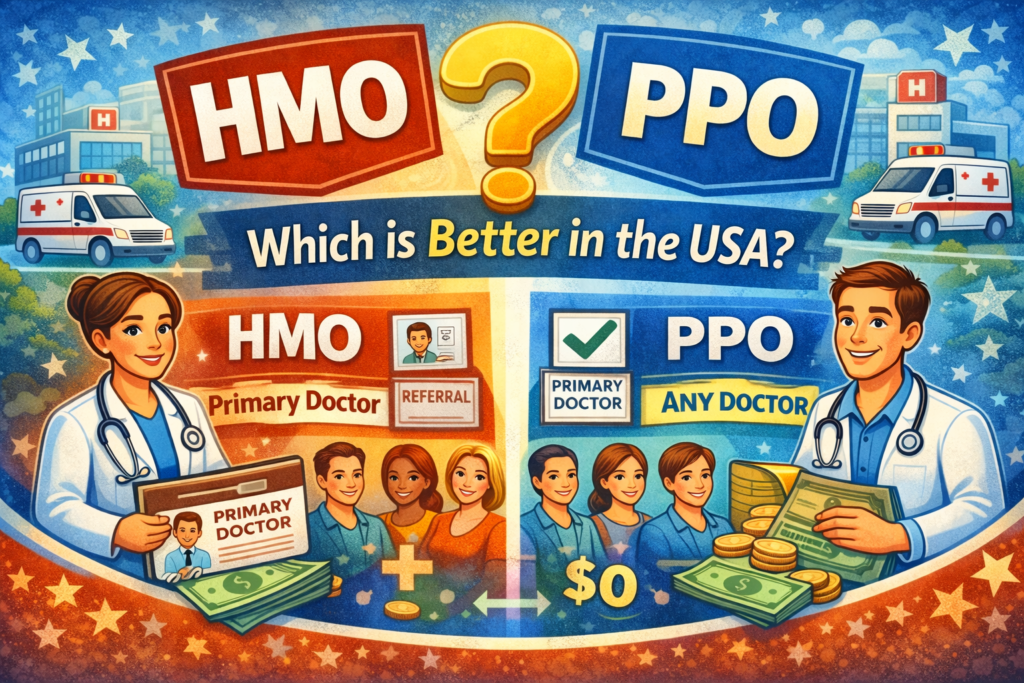
HMO vs PPO Plans: Which Is Better in the USA? (Complete Guide for 2026)
If you’ve ever shopped for health insurance in the United States, you’ve probably run into two common plan types: HMO and PPO. At first glance, these acronyms can look confusing. But don’t worry — once you understand how they work, choosing the right one becomes way easier.
Many Americans struggle with this question: HMO vs PPO plans: which is better in the USA? The truth is, both plans have their advantages. The best option depends on your healthcare needs, budget, and how much flexibility you want when visiting doctors.
In this guide, we’ll break everything down in simple terms, using real-life examples, bullet points, and easy explanations so you can confidently choose the plan that fits your lifestyle.
What Is an HMO Plan?
HMO stands for Health Maintenance Organization. This type of health insurance plan focuses on lower costs and coordinated care through a network of doctors and hospitals.
With an HMO plan, you must choose a Primary Care Physician (PCP) who becomes your main healthcare provider. Your PCP manages your healthcare and refers you to specialists when needed.
Key Features of HMO Plans
- Lower monthly premiums
- Lower out-of-pocket costs
- Requires a Primary Care Doctor
- Requires referrals to see specialists
- Limited to a specific network of doctors and hospitals
Example of an HMO Plan
Let’s say Sarah has an HMO plan.
- She feels constant knee pain.
- She first visits her primary care doctor.
- Her doctor then refers her to an orthopedic specialist.
Without that referral, the insurance won’t cover the specialist visit.
That’s how HMO plans keep healthcare organized and affordable.
What Is a PPO Plan?
PPO stands for Preferred Provider Organization. These plans offer more flexibility when choosing healthcare providers.
Unlike HMO plans, PPO plans do not require referrals to see specialists, and you can visit doctors outside the network (although it will cost more).
Key Features of PPO Plans
- Higher monthly premiums
- More provider flexibility
- No referrals required
- Access to in-network and out-of-network doctors
- Faster access to specialists
Example of a PPO Plan
Let’s say John has a PPO plan.
- He suspects he has a skin condition.
- Instead of seeing a primary doctor first, he directly books an appointment with a dermatologist.
His insurance still covers the visit because PPO plans allow direct specialist access.
That’s the convenience many Americans love about PPO plans.
HMO vs PPO: Key Differences
Understanding the main differences between these plans can help you decide which one is better for your situation.
| Feature | HMO Plan | PPO Plan |
|---|---|---|
| Monthly Premium | Lower | Higher |
| Doctor Network | Limited | Larger |
| Referrals Required | Yes | No |
| Out-of-Network Care | Usually Not Covered | Covered but more expensive |
| Flexibility | Less | More |
In short:
- HMO = cheaper but restrictive
- PPO = more freedom but higher cost
Advantages of HMO Plans
Many Americans choose HMO plans because they are budget-friendly and straightforward.
Benefits of HMO Health Insurance
Lower Monthly Premiums
HMO plans usually cost less per month than PPO plans. This makes them popular among individuals, families, and young professionals.
Lower Deductibles
Many HMO plans offer smaller deductibles compared to PPO plans.
Coordinated Healthcare
Your primary doctor manages your medical care, making it easier to track treatments and referrals.
Predictable Costs
Because care stays within a network, your expenses are easier to predict.
Disadvantages of HMO Plans
While HMO plans are affordable, they do come with limitations.
Downsides of HMO Plans
- Must stay within the network
- Requires referrals for specialists
- Less flexibility when choosing doctors
- Harder to see specialists quickly
For people who want total freedom in healthcare decisions, HMO plans may feel restrictive.
Advantages of PPO Plans
PPO plans are extremely popular among Americans who want maximum flexibility in healthcare choices.
Benefits of PPO Health Insurance
Freedom to Choose Doctors
You can see almost any doctor without referrals.
Out-of-Network Coverage
Even if a doctor isn’t in your insurance network, PPO plans often cover part of the cost.
Faster Specialist Access
Need a cardiologist or dermatologist? No referral needed.
Great for Frequent Travelers
If you travel across states, PPO plans offer broader coverage.
Disadvantages of PPO Plans
Of course, convenience comes with a price.
Downsides of PPO Plans
- Higher monthly premiums
- Higher deductibles
- More complex billing
- Out-of-network care can still be expensive
Many Americans choose PPO plans only if they expect frequent medical visits or specialist care.
Which Plan Is Cheaper in the USA?
Generally speaking:
- HMO plans are cheaper
- PPO plans cost more
Typical monthly premiums in the U.S.:
- HMO Plan: $350 – $550
- PPO Plan: $450 – $700+
However, costs vary depending on:
- Age
- Location
- Employer benefits
- Coverage level
So while HMO plans look cheaper upfront, PPO plans can sometimes provide better long-term value for people needing specialist care.
Who Should Choose an HMO Plan?
HMO plans are best for people who:
- Want lower monthly premiums
- Are generally healthy
- Don’t mind referrals
- Have a trusted primary doctor
- Prefer predictable medical costs
Ideal For
- Young adults
- Families on a budget
- Students
- People with minimal healthcare needs
Who Should Choose a PPO Plan?
PPO plans work best for people who:
- Want maximum flexibility
- Visit specialists often
- Travel frequently
- Want freedom in choosing doctors
Ideal For
- People with chronic conditions
- Individuals needing specialist treatment
- Business travelers
- People who prefer convenience
Real-Life Scenario: HMO vs PPO
Let’s compare two Americans.
Emily with an HMO Plan
- Monthly premium: $400
- Needs referral for specialists
- Lower out-of-pocket costs
She saves money because she rarely visits doctors.
Mike with a PPO Plan
- Monthly premium: $620
- Can visit specialists anytime
- Travels frequently for work
Mike pays more but enjoys complete flexibility.
Neither plan is universally better — it depends on your lifestyle.
Tips for Choosing the Right Health Insurance Plan
Before selecting a health insurance plan in the U.S., consider these factors:
1. Your Budget
If you want lower monthly payments, HMO plans may be better.
2. Your Healthcare Needs
Frequent specialist visits? PPO plans offer more convenience.
3. Your Preferred Doctors
Check whether your doctors are in-network for the plan.
4. Travel Habits
Frequent travelers often benefit from PPO coverage.
5. Family Coverage
Families may prefer HMO plans because of lower premiums.
FAQs About HMO vs PPO Plans
1. Is HMO better than PPO?
HMO plans are better for lower costs, while PPO plans are better for flexibility and specialist access.
2. Can I switch from HMO to PPO?
Yes. Most Americans switch plans during the annual open enrollment period.
3. Do PPO plans require referrals?
No. PPO plans allow you to see specialists without referrals.
4. Are HMO plans cheaper?
Yes. HMO plans typically have lower premiums and lower out-of-pocket costs.
5. Do PPO plans cover out-of-network doctors?
Yes, but the cost will be higher compared to in-network providers.
Final Thoughts
Choosing between HMO vs PPO plans in the USA can feel overwhelming at first. But once you understand the basics, the decision becomes clearer.
Here’s the quick takeaway:
- HMO plans are cheaper and structured but less flexible.
- PPO plans offer freedom and convenience but cost more.
If you rarely visit doctors and want to keep your insurance affordable, an HMO plan might be the best choice.
But if you value flexibility and want quick access to specialists, a PPO plan could be worth the extra cost.
Ultimately, the best health insurance plan is the one that fits your health needs, budget, and lifestyle.