
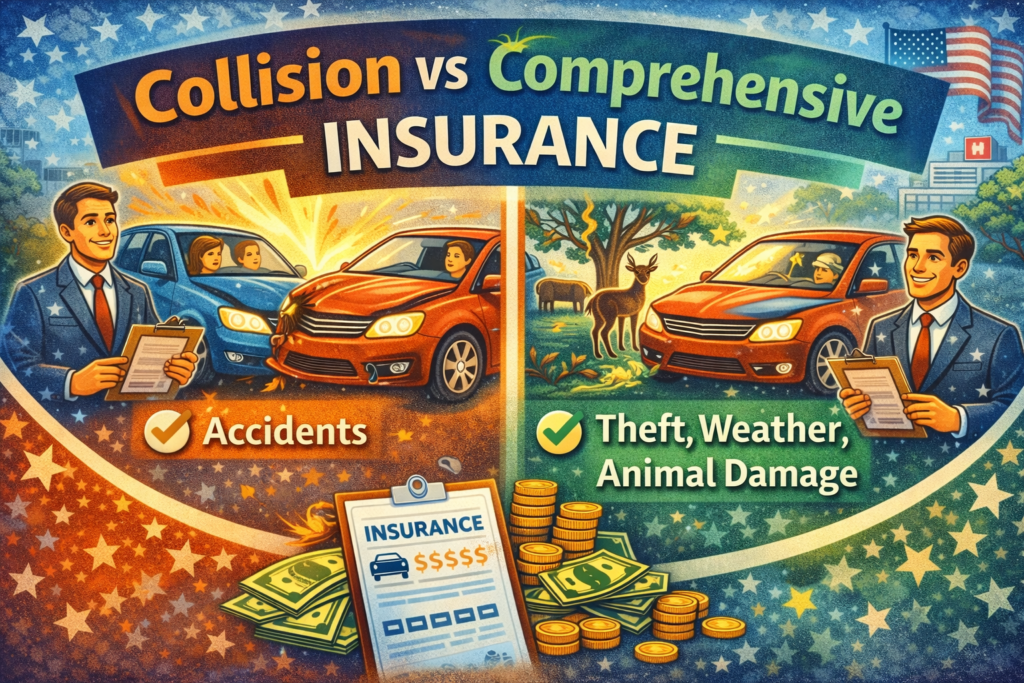
Collision vs Comprehensive Insurance: What’s the Difference? (Complete Guide for U.S. Drivers)
Shopping for car insurance in the United States can feel like navigating a maze. Between liability, collision, comprehensive, deductibles, and coverage limits, the whole thing can get pretty confusing real quick.
Two of the most commonly misunderstood coverages are collision insurance and comprehensive insurance. Drivers often wonder:
- What is the difference between collision and comprehensive car insurance?
- Do I need both collision and comprehensive coverage?
- Which one is better for my car?
Here’s the bottom line: collision and comprehensive insurance protect your own vehicle, but they cover different types of damage.
In this complete guide, we’ll break everything down in simple terms so you can clearly understand how collision vs comprehensive insurance works in the USA.
What Is Collision Insurance?
Collision insurance covers damage to your vehicle when it collides with another object.
This includes accidents involving:
- Another car
- A tree
- A guardrail
- A pole
- A building
- A pothole
- Road barriers
In simple terms, if your car crashes into something, collision coverage helps pay for repairs.
Example of Collision Coverage
Let’s say you’re driving through town and accidentally rear-end another vehicle at a traffic light.
Your car’s front bumper is badly damaged and repairs cost $4,000.
If you have collision insurance, your insurer helps pay for the repairs after your deductible.
What Is Comprehensive Insurance?
Comprehensive insurance protects your car from non-collision events.
These are incidents that occur outside of normal driving accidents.
Comprehensive Insurance Covers
- Car theft
- Vandalism
- Fire damage
- Floods
- Hailstorms
- Falling trees
- Animal collisions (like hitting a deer)
- Natural disasters
Basically, if something unexpected happens to your car that isn’t a crash with another object, comprehensive coverage may apply.
Example of Comprehensive Coverage
Imagine you wake up one morning and find your car windshield smashed from a hailstorm.
Repair cost: $1,500
Comprehensive insurance would help cover the damage.
Collision vs Comprehensive Insurance: Key Differences
Both coverages protect your vehicle, but they apply to different situations.
| Feature | Collision Insurance | Comprehensive Insurance |
|---|---|---|
| Covers accident damage | Yes | No |
| Covers theft | No | Yes |
| Covers vandalism | No | Yes |
| Covers animal collisions | No | Yes |
| Covers hitting objects | Yes | No |
| Covers weather damage | No | Yes |
Simple Way to Remember
Collision = crash-related damage
Comprehensive = everything else
Why These Coverages Matter
Without collision or comprehensive insurance, you may have to pay out of pocket for expensive repairs.
Car repairs today can easily cost thousands of dollars.
Example Repair Costs
- Windshield replacement: $500–$1,500
- Front bumper repair: $1,000–$3,000
- Major accident repairs: $5,000–$15,000
Having the right insurance coverage can prevent serious financial stress.
Do You Need Both Collision and Comprehensive Coverage?
Many drivers carry both types of insurance, especially if they have full coverage car insurance.
Full coverage typically includes:
- Liability insurance
- Collision insurance
- Comprehensive insurance
Drivers Who Should Consider Both
Collision and comprehensive coverage may be worth it if you:
- Own a newer car
- Have a financed vehicle
- Lease your car
- Drive in high-traffic areas
- Live in areas prone to storms or theft
Lenders often require both coverages until the loan is paid off.
When Collision Insurance May Be Worth It
Collision coverage is particularly valuable for drivers who:
- Drive frequently
- Live in busy cities
- Own expensive vehicles
- Want protection against accident damage
Even safe drivers can experience accidents caused by other drivers.
When Comprehensive Insurance Is Worth It
Comprehensive insurance is useful for protecting your car from unexpected events.
You may benefit from comprehensive coverage if you live in areas with:
- Severe weather
- High car theft rates
- Frequent wildlife crossings
- Urban vandalism
For example, drivers in rural areas often face risks from deer collisions.
Understanding Insurance Deductibles
Both collision and comprehensive coverage include a deductible.
A deductible is the amount you must pay before insurance covers the rest.
Example
Repair cost: $3,000
Deductible: $500
You pay: $500
Insurance pays: $2,500
Higher deductibles usually lead to lower monthly premiums.
Average Cost of Collision vs Comprehensive Insurance
Costs vary depending on the driver, vehicle, and location.
However, average estimates in the United States are:
Collision Insurance
Average annual cost: $300 – $600
Comprehensive Insurance
Average annual cost: $150 – $400
Because comprehensive claims are typically less severe than accidents, it usually costs less.
Factors That Affect Insurance Costs
Insurance companies consider several factors when calculating premiums.
Common Factors
- Age
- Driving history
- Location
- Credit score
- Vehicle value
- Annual mileage
- Claims history
For example, drivers with clean records typically receive lower insurance rates.
When You Might Drop These Coverages
Collision and comprehensive insurance may not always make financial sense.
Drivers sometimes drop these coverages when:
- Their car value drops below $3,000
- Repair costs exceed vehicle value
- The car is older and rarely driven
A good rule of thumb: if insurance premiums exceed 10% of your car’s value, you might reconsider coverage.
Real-Life Example: Collision vs Comprehensive
Let’s look at two situations.
Scenario 1: Collision Accident
Jake accidentally hits a guardrail.
Repair cost: $5,000
His collision insurance pays the cost after his deductible.
Scenario 2: Storm Damage
A hailstorm damages Maria’s car while parked outside.
Repair cost: $2,000
Her comprehensive insurance covers the damage.
Pros and Cons of Collision Insurance
Pros
- Covers accident damage
- Protects your vehicle value
- Helps pay expensive repair bills
- Provides peace of mind
Cons
- Higher premium
- Deductibles apply
- May not be worth it for older cars
Pros and Cons of Comprehensive Insurance
Pros
- Covers theft and vandalism
- Protects against natural disasters
- Usually cheaper than collision
- Covers animal-related damage
Cons
- Deductible still applies
- Doesn’t cover accident damage
Long-Tail Keywords Related to Collision vs Comprehensive Insurance
Drivers frequently search for terms like:
- difference between collision and comprehensive car insurance
- do I need collision and comprehensive insurance
- collision vs comprehensive coverage explained
- cheapest collision and comprehensive auto insurance
- what does comprehensive insurance cover for cars
- is collision insurance worth it for older cars
These long-tail keywords help drivers find detailed answers to their insurance questions.
FAQs About Collision vs Comprehensive Insurance
What is the main difference between collision and comprehensive insurance?
Collision insurance covers accident-related damage, while comprehensive insurance covers non-collision events like theft, weather damage, and vandalism.
Do I need both collision and comprehensive insurance?
Many drivers choose both coverages for full protection, especially if their car is financed or valuable.
Is comprehensive insurance cheaper than collision insurance?
Yes. Comprehensive insurance usually costs less because claims tend to involve smaller damages.
Does collision insurance cover hitting a deer?
No. Hitting an animal is typically covered under comprehensive insurance.
When should I drop collision insurance?
Drivers often drop collision coverage when their car value becomes very low and repair costs exceed the vehicle’s worth.
Final Thoughts
Understanding the difference between collision vs comprehensive insurance is key to choosing the right auto insurance policy.
Here’s the simple breakdown:
Collision insurance covers accident-related damage to your car.
Comprehensive insurance covers non-accident events like theft, storms, vandalism, and animal collisions.
Together, these coverages provide strong financial protection for your vehicle and are often included in full coverage car insurance policies.
Before choosing coverage, consider your vehicle’s value, driving habits, and financial situation.
The right combination of coverage can save you thousands of dollars in unexpected repair costs.