
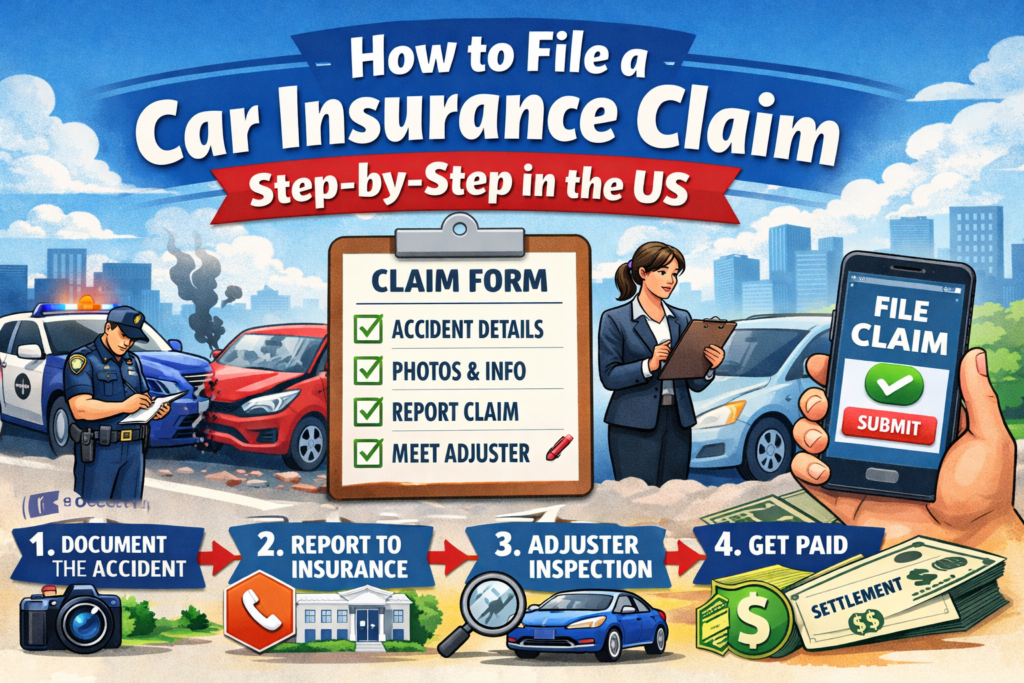
Learn how to file a car insurance claim step-by-step in the US (2026 guide). Simple, beginner-friendly, real-life examples, FAQs, tips, and mistakes to avoid. Get your claim approved faster.
It’s one of those moments you never forget.
You’re driving home after a long day, maybe thinking about dinner or scrolling through your playlist—and then bam. A sudden crash. Your heart races. Your hands shake. And in that instant, everything feels confusing.
“What do I do now?”
If you’ve ever been in a car accident—or worry you might be—this guide is for you.
Filing a car insurance claim in the United States can feel overwhelming, especially if it’s your first time. But here’s the good news: it’s way simpler than it seems when you know the exact steps.
This 2026 beginner-friendly guide breaks it all down in plain English—with real-life examples, insider tips, and mistakes to avoid—so you can handle the situation like a pro.
The Problem
Most drivers panic after an accident. And honestly? That’s normal.
But here’s the issue:
- You don’t know what information to collect
- You delay reporting the accident
- You accidentally say the wrong thing to insurers
- You miss deadlines that affect your payout
Result? Claim delays, reduced compensation, or even denial.
The Agitation
Insurance companies aren’t your enemies—but they do follow strict processes.
If you:
- Skip documentation
- Forget photos
- Or give incomplete details
You could lose thousands of dollars in coverage.
And that’s frustrating—especially when you’re already dealing with stress, repairs, or injuries.
The Solution
Let’s fix that.
Below is your step-by-step roadmap to filing a car insurance claim in the US—explained simply, with real examples, tables, and expert tips.
Step-by-Step Guide: Filing a Car Insurance Claim in the US
Step 1: Stay Safe First (Always Priority #1)
Before anything else:
- Check yourself and passengers for injuries
- Move to a safe location (if possible)
- Call 911 if there are injuries or major damage
“Your safety matters more than paperwork. Always.”
Step 2: Call the Police (When Required)
In many US states, you must report accidents if:
- There are injuries
- Property damage exceeds a certain amount
- A driver is uninsured
Why this matters:
A police report strengthens your insurance claim.
Step 3: Gather Essential Information
This is where many beginners mess up.
Collect:
- Driver’s name & contact info
- Insurance company & policy number
- License plate number
- Driver’s license
- Witness contact details
Quick Checklist Table:
| Information Needed | Why It Matters |
| Driver Info | Identifies responsible party |
| Insurance Details | Needed to process claim |
| Photos | Evidence for damage |
| Witness Statements | Supports your version |
Step 4: Take Photos & Videos (CRITICAL)
Use your phone to capture:
- Damage to all vehicles
- License plates
- Road conditions
- Traffic signs
- Injuries (if any)
Pro tip: Take more photos than you think you need.
Step 5: Notify Your Insurance Company ASAP
Most insurers require prompt reporting.
You can file:
- Online
- Through mobile apps
- Via phone
Visit your insurer or start learning more at:
https://insurancesimplifiedusa.com/
Step 6: Understand What Type of Claim You’re Filing
Common Types of Claims:
| Claim Type | When It Applies |
| Collision | Crash with another vehicle/object |
| Comprehensive | Theft, fire, weather damage |
| Liability | You caused damage to others |
| Uninsured Motorist | Other driver has no insurance |
Step 7: Work With an Insurance Adjuster
The adjuster will:
- Inspect your vehicle
- Review evidence
- Estimate repair costs
Be honest, clear, and cooperative.
Step 8: Get Repair Estimates
You may:
- Use insurer-approved repair shops
- Or choose your own mechanic
Comparison Table:
| Option | Pros | Cons |
| Approved Shop | Faster processing | Less flexibility |
| Independent Mechanic | More control | Possible delays |
Step 9: Review Settlement Offer Carefully
Before accepting:
- Compare with repair estimates
- Ensure all damages are included
- Ask questions if unsure
“Never rush into accepting the first offer.”
Step 10: Receive Payment or Repairs
Depending on your policy:
- You may receive direct payment
- Or insurer pays repair shop directly
Real-Life Example (Beginner Friendly)
Case: Sarah from Texas
Sarah was rear-ended at a red light.
What she did right:
- Took photos immediately
- Collected witness info
- Filed claim within 24 hours
Result?
- Claim approved in 7 days
- Full repair covered
- Rental car included
Common Mistakes to Avoid
- Delaying claim reporting
- Admitting fault at the scene
- Not taking photos
- Ignoring medical symptoms
- Accepting low settlement quickly
Internal Linking Strategy
For more helpful insurance guides, check:
https://insurancesimplifiedusa.com
Claim Timeline (What to Expect)
| Stage | Timeframe |
| Claim Filing | Same day–48 hours |
| Adjuster Review | 2–5 days |
| Estimate Approval | 5–10 days |
| Final Settlement | 1–3 weeks |
Key Takeaways
- Always prioritize safety first
- Document everything (photos = power)
- File your claim ASAP
- Understand your policy type
- Don’t rush settlement decisions
FAQs (Very Important)
1. How long do I have to file a car insurance claim in the US?
Most insurers recommend filing within 24–72 hours, but laws vary by state.
2. Will my premium go up after a claim?
It depends:
- At-fault accident → likely increase
- Not-at-fault → may not increase
3. Can I file a claim without a police report?
Yes—but having one strengthens your case significantly.
4. What if the other driver is uninsured?
You can use uninsured motorist coverage if included in your policy.
5. Should I contact the other driver’s insurance?
You can, but it’s usually better to go through your own insurer first.
6. What happens if I’m partially at fault?
Many states follow comparative negligence rules, meaning your payout may be reduced.
7. Can I choose my own repair shop?
Yes, but insurer-approved shops may speed up the process.
8. How do I speed up my claim?
- Submit all documents quickly
- Respond to adjuster promptly
- Keep records organized
9. What if my claim is denied?
You can:
- Request explanation
- Appeal decision
- Seek legal advice
10. Is filing a claim worth it for small damage?
If repair cost is close to your deductible, it might not be worth filing.
External Sources (For Authority & Trust)
- National Association of Insurance Commissioners (NAIC)
- Insurance Information Institute (III)
- USA.gov Insurance Resources
- State DMV accident reporting guidelines
Conclusion
Car accidents are stressful—but filing an insurance claim doesn’t have to be.
When you follow the steps in this 2026 beginner-friendly guide, you stay in control, avoid costly mistakes, and get the compensation you deserve.
“Knowledge is your best protection after an accident.”
Take a few minutes today to bookmark this guide—you’ll thank yourself later.
Need more insurance tips?
Visit: https://insurancesimplifiedusa.com/
SEO Keywords (High Ranking Potential)
Primary Keywords:
- how to file a car insurance claim step-by-step in the US
- car insurance claim process explained simply
- file insurance claim for beginners USA
- 2026 car insurance claim guide
Long-Tail Keywords:
- how to file an auto insurance claim after an accident USA
- what to do after car accident insurance claim
- step by step car insurance claim process for beginners
- how long does insurance claim take USA
- tips to get insurance claim approved faster