
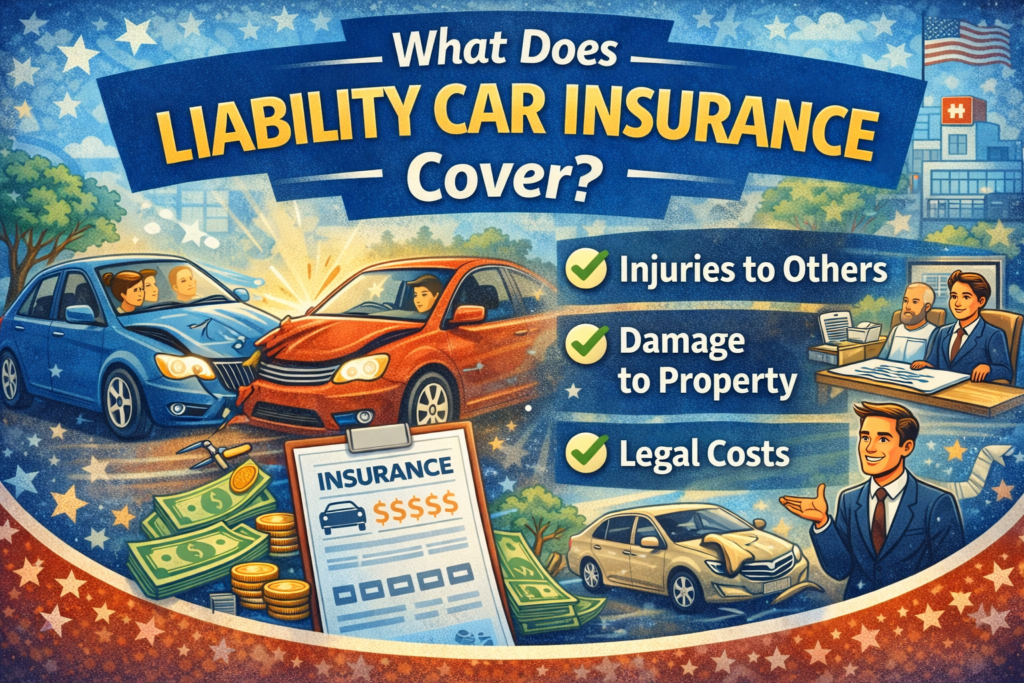
What Does Liability Car Insurance Cover? (Complete Guide for U.S. Drivers)
If you own a car in the United States, you’ve probably heard the term liability car insurance tossed around a lot. But let’s be real—insurance jargon can feel like a whole different language.
So here’s the big question: What does liability car insurance cover, and why do you need it?
In simple terms, liability car insurance pays for damages and injuries you cause to other people in a car accident. It’s the most basic type of auto insurance, and in most states, it’s required by law.
But there’s more to it than that. In this guide, we’ll break down:
- What liability insurance covers
- What it doesn’t cover
- How it works after an accident
- How much coverage you should get
- Tips to find cheap liability car insurance in the USA
Let’s dive in.
What Is Liability Car Insurance?
Liability car insurance is a type of auto insurance that protects you financially if you’re responsible for a car accident that causes injuries or property damage to others.
It helps pay for:
- Medical bills for injured drivers or passengers
- Repairs to other people’s vehicles
- Property damage
- Legal expenses if you’re sued
However, it’s important to remember one key thing:
👉 Liability insurance does NOT cover your own car or injuries.
It only pays for the damage you cause to others.
That’s why it’s called “third-party coverage.”
Types of Liability Coverage
Liability insurance usually comes with two main components.
1. Bodily Injury Liability Coverage
This part of your policy pays for medical expenses and related costs if someone gets injured in an accident that you caused.
It can cover things like:
- Emergency room visits
- Hospital stays
- Surgery
- Rehabilitation
- Lost wages
- Pain and suffering
- Legal fees if you’re sued
Example
Imagine you accidentally rear-end another car at a traffic light.
The driver suffers a neck injury and needs medical treatment costing $20,000.
Your bodily injury liability insurance helps cover those medical expenses.
2. Property Damage Liability Coverage
This covers damage to someone else’s property caused by your vehicle.
Examples include:
- Repairing another car
- Replacing a damaged fence
- Fixing a building or garage
- Repairing street signs
- Utility pole damage
Example
Let’s say you lose control on a rainy day and hit a neighbor’s fence and mailbox.
Your property damage liability insurance would pay for those repairs.
Understanding Liability Coverage Limits
Liability insurance policies usually appear as three numbers, like this:
50/100/50
Here’s what that means:
- $50,000 bodily injury per person
- $100,000 bodily injury per accident
- $50,000 property damage coverage
Example Scenario
You cause an accident involving two injured drivers.
Their medical costs are:
- Driver 1: $40,000
- Driver 2: $30,000
Your policy pays:
- $40,000 for the first driver
- $30,000 for the second driver
But if medical costs exceed your limit, you may have to pay the rest out of pocket.
What Liability Car Insurance Does NOT Cover
Many drivers assume liability insurance covers everything—but that’s not the case.
Here’s what it typically does not cover:
- Damage to your own car
- Your medical expenses
- Theft of your vehicle
- Vandalism
- Flood or fire damage
- Hit-and-run accidents
- Uninsured drivers
To protect against these risks, drivers often add:
- Collision coverage
- Comprehensive coverage
- Uninsured motorist coverage
Is Liability Car Insurance Required in the USA?
Yes—most U.S. states require drivers to carry liability car insurance.
Driving without insurance can lead to serious penalties such as:
- Heavy fines
- License suspension
- Vehicle impoundment
- Legal consequences
Each state sets minimum liability coverage limits, which vary widely.
Example Minimum Requirements
Some states require:
- 25/50/25 coverage
Meaning:
- $25,000 bodily injury per person
- $50,000 per accident
- $25,000 property damage
However, many financial experts recommend higher coverage limits to protect your assets.
Why Liability Insurance Is Important
Liability insurance protects your financial future.
Car accidents can be extremely expensive.
Medical bills alone can reach tens of thousands of dollars.
Without insurance, you may have to pay these costs yourself.
Benefits of Liability Insurance
- Protects you from lawsuits
- Covers medical expenses for others
- Pays for property damage
- Keeps you legally compliant
- Protects your savings and assets
In short, it acts as a financial safety net.
How Much Liability Coverage Should You Get?
While minimum coverage satisfies legal requirements, it may not be enough.
Many insurance experts suggest higher limits such as:
- 100/300/100 coverage
That means:
- $100,000 bodily injury per person
- $300,000 bodily injury per accident
- $100,000 property damage
Why?
Because serious accidents can easily exceed minimum coverage limits.
Higher coverage helps protect your personal finances.
How Much Does Liability Car Insurance Cost?
Liability insurance is usually the cheapest type of car insurance.
Average monthly cost in the U.S.:
- $50 to $120 per month
However, your premium depends on several factors.
Factors That Affect Car Insurance Rates
Insurance companies consider:
- Age
- Driving history
- Location
- Credit score
- Vehicle type
- Annual mileage
- Claim history
For example:
- Safe drivers usually pay less
- Drivers with accidents pay more
Tips to Get Cheap Liability Car Insurance
Want to lower your insurance bill? Try these smart strategies.
Compare Multiple Insurance Quotes
Shopping around can save hundreds of dollars per year.
Maintain a Clean Driving Record
Avoid accidents and speeding tickets.
Bundle Insurance Policies
Combining home and auto insurance often unlocks discounts.
Increase Your Deductible
Higher deductibles can reduce premiums.
Ask About Discounts
Common discounts include:
- Safe driver discount
- Good student discount
- Low mileage discount
- Defensive driving course discount
Real-Life Example of Liability Insurance
Let’s say Emma accidentally runs a stop sign and crashes into another vehicle.
The accident results in:
- $30,000 medical bills
- $12,000 car repair costs
Her insurance policy is 50/100/50.
Her liability coverage would pay:
- $30,000 for medical expenses
- $12,000 for property damage
Emma doesn’t have to pay those expenses herself.
Without insurance, she could face serious financial trouble.
When Liability Insurance May Not Be Enough
Liability insurance alone may not fully protect you.
You might need additional coverage if:
- Your car is valuable
- You live in a high-traffic city
- You drive long distances
- You want full financial protection
Many Americans choose full coverage insurance, which includes:
- Liability
- Collision
- Comprehensive coverage
This offers broader protection.
FAQs About Liability Car Insurance
What does liability car insurance cover in the USA?
Liability insurance covers injuries and property damage you cause to others in an accident.
It does not cover your own car or injuries.
Is liability insurance the same as full coverage?
No.
Liability insurance only protects other people.
Full coverage insurance includes liability, collision, and comprehensive protection.
What happens if damages exceed my liability coverage?
If accident costs exceed your coverage limits, you may have to pay the remaining amount out of pocket.
In some cases, you could be sued.
Can I drive with liability-only insurance?
Yes, if it meets your state’s minimum insurance requirements.
However, your own car won’t be protected.
How can I lower my liability insurance premium?
You can reduce your premium by:
- Comparing insurers
- Maintaining safe driving
- Increasing deductibles
- Using discounts
Final Thoughts
Liability car insurance is one of the most important types of auto insurance in the United States.
It protects you financially if you cause an accident that injures someone or damages their property.
To recap, liability insurance covers:
- Bodily injury to others
- Property damage to others
- Legal defense costs
But it does not cover your own vehicle or medical bills.
While minimum coverage may be legally sufficient, many drivers choose higher coverage limits for stronger financial protection.
At the end of the day, the best policy is one that balances affordability with enough protection to safeguard your finances.