
What Is Health Insurance in the USA? (Simple Guide)
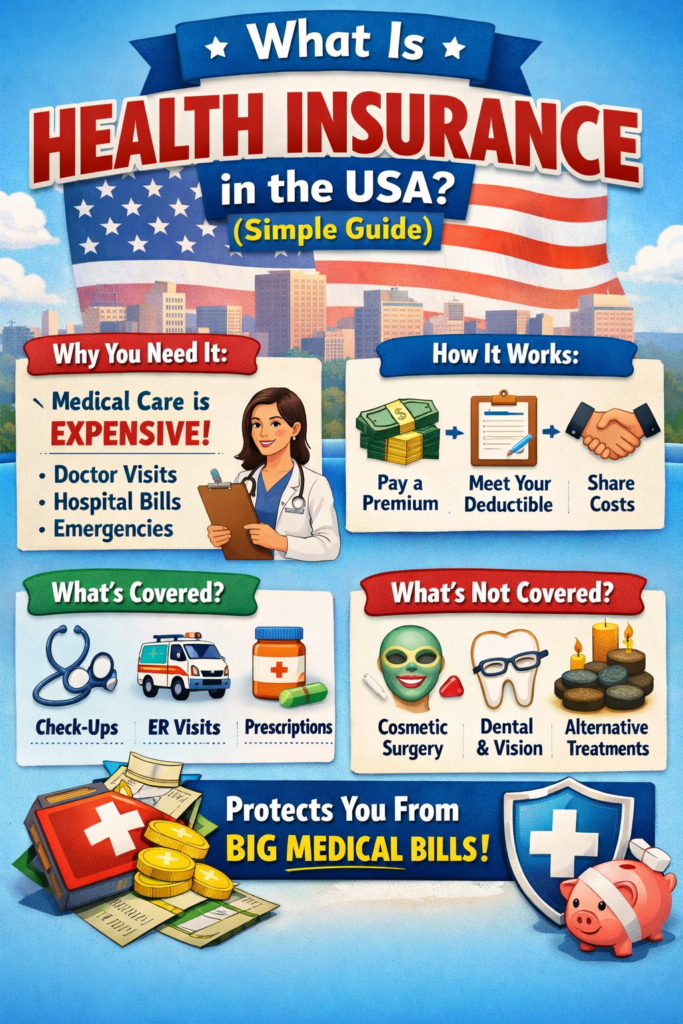
Disclaimer: This article is for educational purposes only. It is not medical, legal, or financial advice.
Let’s be real for a second. Health insurance in the United States can feel confusing, stressful, and honestly… kind of overwhelming. You hear words like “deductible,” “copay,” and “out-of-pocket max,” and suddenly your brain checks out.
If you’ve ever wondered what is health insurance in the USA and why it feels so complicated, you’re not alone. This guide breaks it all down in plain English. No hype. No sales pitch. Just straight-up facts, real-life examples, and clear explanations.
So grab a coffee and let’s break it down.
Why Health Insurance Exists in the US
Here’s the thing: healthcare in America is expensive. Like, no joke expensive.
A simple doctor visit can cost a couple hundred bucks. An ER visit? That can jump into the thousands real fast. One overnight hospital stay can wipe out months of savings.
Health insurance exists to:
- Help pay for medical care
- Protect people from massive, unexpected bills
- Spread healthcare costs across many people
Instead of paying full price every time you need care, insurance helps cover a chunk of those costs.
Bottom line: health insurance is a financial safety net.
Why Healthcare Is So Expensive in America
This is a big deal, and it’s worth understanding.
Healthcare costs are high in the US because of:
- Expensive hospital systems
- High drug prices
- Advanced medical technology
- Administrative costs
- Complex billing systems
For example:
- A basic ER visit can cost $1,200 to $3,000
- A short hospital stay can run $10,000+
- Ambulance rides often cost $500 to $2,500
Without insurance, you’re usually on the hook for all of it.
That’s why health insurance for beginners in the USA matters so much.
What Is Health Insurance? (Plain English Version)
So what is health insurance, really?
Health insurance is an agreement where:
- You pay a monthly fee
- The insurance plan helps pay for medical costs
- You still pay part of the bill
You’re basically sharing risk with millions of other people. Everyone pays in, and when someone needs care, the cost gets spread out.
It doesn’t mean healthcare is free. It means it’s less brutal on your wallet.
How Health Insurance Works in the US (Step by Step)
Let’s walk through this like a real-life situation.
Step 1: You Pay a Monthly Premium
This is the amount you pay every month just to have insurance.
Example:
- $350 per month
- You pay this even if you don’t see a doctor
Think of it like a subscription.
Step 2: You Have a Deductible
The deductible is the amount you pay before insurance starts sharing costs.
Example:
- Deductible: $2,000
- You pay the first $2,000 of covered medical bills
Some services (like preventive care) are often covered before the deductible.
Step 3: Copays and Coinsurance Kick In
Once the deductible is met, costs are shared.
Copay:
- Fixed amount
- Example: $30 for a doctor visit
Coinsurance:
- Percentage of the bill
- Example: You pay 20%, insurance pays 80%
Step 4: Out-of-Pocket Maximum
This is your financial ceiling.
Once you hit this number, insurance covers 100% of covered services for the rest of the year.
Example:
- Out-of-pocket max: $8,500
- After that, you’re done paying (for covered care)
This is a huge deal if something serious happens.
Employer Insurance vs Private vs ACA Plans
Not all health insurance works the same way.
Employer-Sponsored Insurance
- Offered through your job
- Employer usually pays part of the premium
- Common for full-time workers
This is how many Americans get coverage.
Private Health Insurance
- Bought directly from insurance marketplaces or brokers
- You pay the full premium
- Often used by self-employed people
Costs vary widely.
ACA (Affordable Care Act) Plans
- Available through Health Insurance Marketplace
- Must cover essential health benefits
- May offer income-based subsidies
These plans helped reduce the number of uninsured Americans.
Medicaid and Medicare Basics
Medicaid
- Government program
- For low-income individuals and families
- Rules vary by state
Coverage is usually comprehensive with low costs.
Medicare
- Primarily for people 65 and older
- Also covers certain younger people with disabilities
Medicare has different “parts” that cover hospital care, doctor visits, and prescriptions.
What Health Insurance Usually Covers
Most health insurance plans in the US cover:
- Doctor visits
- Preventive care (checkups, vaccines)
- Emergency room visits
- Hospital stays
- Prescription drugs
- Mental health services
- Maternity and newborn care
- Lab tests and imaging
Preventive care is often covered at no extra cost. That’s a big win.
What Health Insurance Usually Does NOT Cover
This part trips people up.
Health insurance often does NOT cover:
- Cosmetic procedures
- Elective treatments
- Experimental procedures
- Long-term care
- Some alternative therapies
- Dental and vision (usually separate plans)
Always check plan details. Assumptions lead to surprise bills.
Real-Life Example: A Doctor Visit
Let’s say you see a primary care doctor.
- Visit cost: $180
- Your copay: $25
- Insurance pays the rest
Without insurance? You’d pay the full $180.
No joke—that adds up fast.
Real-Life Example: Emergency Room Visit
You go to the ER for severe pain.
- Total bill: $2,800
- You haven’t met your deductible
- You pay most of it
This is where insurance still helps, but timing matters.
Common Health Insurance Mistakes Americans Make
Here’s some real talk.
People often:
- Don’t understand their deductible
- Ignore out-of-network rules
- Skip preventive care
- Assume everything is covered
- Don’t read plan summaries
These mistakes can cost thousands.
Learning how health insurance works in the US saves money and stress.
Why Understanding Health Insurance Matters
Health insurance decisions affect:
- Your finances
- Your access to care
- Your peace of mind
One accident or illness can change everything.
Knowing the basics helps you avoid panic when you need care most.
FAQ: Health Insurance USA Explained
1. Is health insurance required in the US?
There’s no federal penalty now, but some states have their own rules.
2. Does insurance cover emergency room visits?
Yes, but costs depend on your plan and deductible.
3. Are prescriptions always covered?
Many are, but coverage depends on the plan’s drug list.
4. Is dental included in health insurance?
Usually no. Dental is often separate.
5. What happens if I go out of network?
You may pay much more, or everything.
6. Does insurance cover mental health?
Most plans include mental health services.
7. Can I have insurance and still get big bills?
Yes. Insurance reduces costs but doesn’t eliminate them.
Final Thoughts: The Bottom Line
So, what is health insurance in the USA?
It’s a system designed to help people afford healthcare in a country where medical costs are high. It’s not perfect. It’s not simple. But understanding how it works makes a massive difference.
Before choosing a plan, learn:
- What you pay monthly
- What you pay when you need care
- What’s covered and what’s not
The more you understand health insurance, the fewer surprises you’ll face later.
And trust me—when it comes to healthcare, surprises are the last thing anyone wants.