
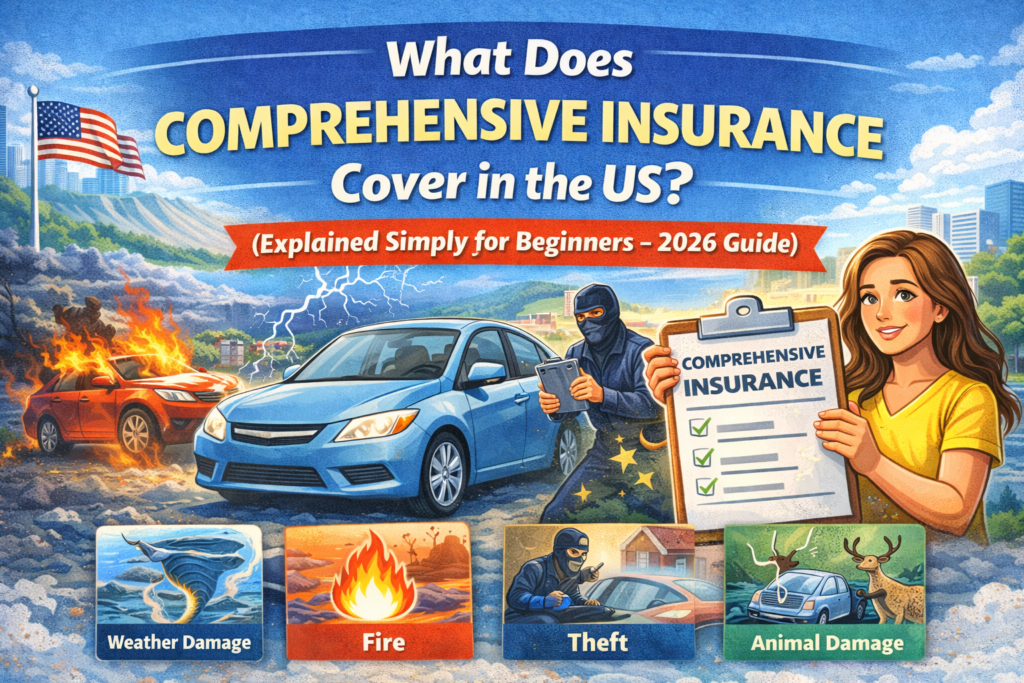
Learn what comprehensive car insurance covers in the US (2026 guide). Simple explanation, real-life examples, tables, FAQs, and tips to choose the best coverage.
You park your car at night. Everything is fine.
Next morning… it’s gone.
Or maybe it’s still there—but smashed by a fallen tree. Or damaged by hail. Or broken into.
And suddenly you’re thinking:
“Wait… does my insurance even cover this?”
Here’s the reality:
Most accidents people worry about—crashes, collisions—aren’t the only threats to your car.
Sometimes, the biggest damage comes from things you never saw coming.
That’s where comprehensive insurance steps in.
The Problem (PAS Framework)
Many drivers think:
- “I have insurance, I’m covered for everything”
- “Only accidents matter”
But that’s not true.
Standard policies don’t cover:
- Theft
- Natural disasters
- Vandalism
The Agitation
Imagine:
- Your car gets stolen
- Insurance says: “Sorry, not covered”
Now you’re stuck paying thousands out of pocket.
“The biggest risks are often the ones you don’t expect.”
The Solution
This 2026 beginner-friendly guide explains:
- What comprehensive insurance really covers
- What it does NOT cover
- When you need it
- How to save money
What Is Comprehensive Insurance? (Simple Explanation)
Comprehensive insurance is:
Coverage that protects your car from non-collision damage.
In simple words:
If it’s NOT a crash—but damages your car—comprehensive may cover it.
Comprehensive Insurance Explained in One Table
| Situation | Covered? |
| Car accident | No |
| Theft | Yes |
| Fire | Yes |
| Flood | Yes |
| Vandalism | Yes |
What Does Comprehensive Insurance Cover?
1. Theft
If your car is stolen:
Insurance pays its value (minus deductible)
2. Vandalism
- Broken windows
- Key scratches
- Spray paint damage
3. Natural Disasters
Includes:
- Floods
- Hurricanes
- Earthquakes
- Tornadoes
4. Weather Damage
Common examples:
- Hail damage
- Fallen tree branches
- Storm debris
5. Fire Damage
- Engine fire
- External fire
6. Animal Damage
Example:
- Hitting a deer
- Rodents chewing wires
Full Coverage List
| Type of Damage | Covered |
| Theft | Yes |
| Fire | Yes |
| Flood | Yes |
| Hail | Yes |
| Vandalism | Yes |
| Animal collision | Yes |
What Comprehensive Insurance Does NOT Cover
Not Covered:
- Car accidents (collision)
- Wear and tear
- Mechanical failure
- Personal belongings
Comprehensive vs Collision Insurance
| Feature | Comprehensive | Collision |
| Theft | ✅ | ❌ |
| Accident | ❌ | ✅ |
| Weather damage | ✅ | ❌ |
| Animal damage | ✅ | ❌ |
Real-Life Example
Case: Lisa from Florida
- Parked car overnight
- Hurricane damaged vehicle
Repair cost: $6,000
Comprehensive insurance covered most of it
Do You Really Need Comprehensive Insurance?
You SHOULD consider it if:
- You have a new car
- You live in high-risk area
- You can’t afford replacement
You MAY NOT need it if:
- Car value is very low
- You can afford replacement
Need vs No Need (Table)
| Situation | Need Comprehensive? |
| New car | ✅ Yes |
| High theft area | ✅ Yes |
| Old low-value car | ❌ Maybe not |
How Much Does It Cost?
Average Cost:
- $100–$300/year
Usually cheaper than collision insurance.
Deductible Explained
Example:
- Damage = $3,000
- Deductible = $500
Insurance pays $2,500
Common Mistakes to Avoid
- Thinking it covers accidents
- Choosing very high deductible
- Not checking exclusions
Internal Links
https://insurancesimplifiedusa.com
Comprehensive vs No Coverage
| Scenario | With Coverage | Without Coverage |
| Theft | Covered | Pay full cost |
| Storm damage | Covered | Pay full cost |
| Fire damage | Covered | Pay full cost |
Pro Tips (Insider Advice)
- Choose deductible wisely
- Bundle with collision
- Review yearly
Key Takeaways
- Covers non-collision damage
- Protects from theft, weather, fire
- Not required by law
- Smart for newer vehicles
FAQs (Very Important)
1. What does comprehensive insurance cover?
It covers non-collision damage like theft, fire, and weather.
2. Does it cover accidents?
No—that’s collision insurance.
3. Is it required?
No, but lenders may require it.
4. Does it cover stolen car?
Yes.
5. Does it cover floods?
Yes.
6. Is it worth it?
Yes, for most drivers.
7. How much does it cost?
$100–$300/year on average.
8. Can I remove it anytime?
Yes.
9. Does it cover scratches?
Only if vandalism-related.
10. Should I combine with collision?
Yes—for full protection.
External Sources
- National Association of Insurance Commissioners
- Insurance Information Institute
- USA.gov Insurance
Conclusion
Comprehensive insurance is one of those things you don’t think about—until you really need it.
“It protects you from the unexpected—the things you can’t control.”
Whether it’s theft, storms, or random damage, having this coverage can save you thousands.
Don’t guess. Don’t assume.
Get covered the smart way.
Want more beginner-friendly guides?
https://insurancesimplifiedusa.com/
People also ask
What is comprehensive insurance for dummies?
Comprehensive insurance covers non-collision damage like theft, fire, vandalism, hail, and falling objects. It may be required if you lease or finance your vehicle, but is optional if you own your car fully.
What does Dave Ramsey say about comprehensive insurance?
Dave frequently recommends full coverage for car insurance, which includes both comprehensive coverage and collision coverage. These are often purchased together since they provide similar protections, but are actually different coverages.
What does fully comprehensive insurance cover you for?
Also known as ‘fully comprehensive cover’ or ‘fully comp’, it protects you against accidental damage to yourself or your car if you’re involved in a collision. It also covers you for injury caused to third parties, and damage to their property or vehicle.
What does comprehensive insurance not cover?
Comprehensive coverage does not cover damages caused by hitting another vehicle or entity. These incidents are covered under collision coverage. Normal wear and tear on your vehicle is also not covered by comprehensive car insurance.
Is it better to carry comprehensive or collision?
While comprehensive is cheaper and covers environmental risks (theft, hail, animals). Collision is vital for active drivers, while comprehensive is essential in high-crime/severe-weather areas.
Can I drive any car with comprehensive cover?
No, having comprehensive insurance does not automatically let you drive any car. Some policies include a “Driving Other Cars (DOC)” clause, but many do not. Always verify your policy details and confirm with your insurer before getting behind the wheel of another vehicle.
What insurance does Dave Ramsey not recommend?
Dave Ramsey recommends term insurance as opposed to whole life, variable life or universal life insurance. These cash value policies are often a better deal for the agent than the insured, and they eat up extra money.
What is the average cost of comprehensive?
Comprehensive insurance coverage cost about $160 a year on average in 2017.
SEO Keywords
Primary Keywords:
- what does comprehensive insurance cover
- comprehensive insurance explained simply
- comprehensive coverage USA 2026
Long-Tail Keywords:
- what is covered under comprehensive car insurance USA
- comprehensive vs collision insurance explained
- do I need comprehensive insurance