
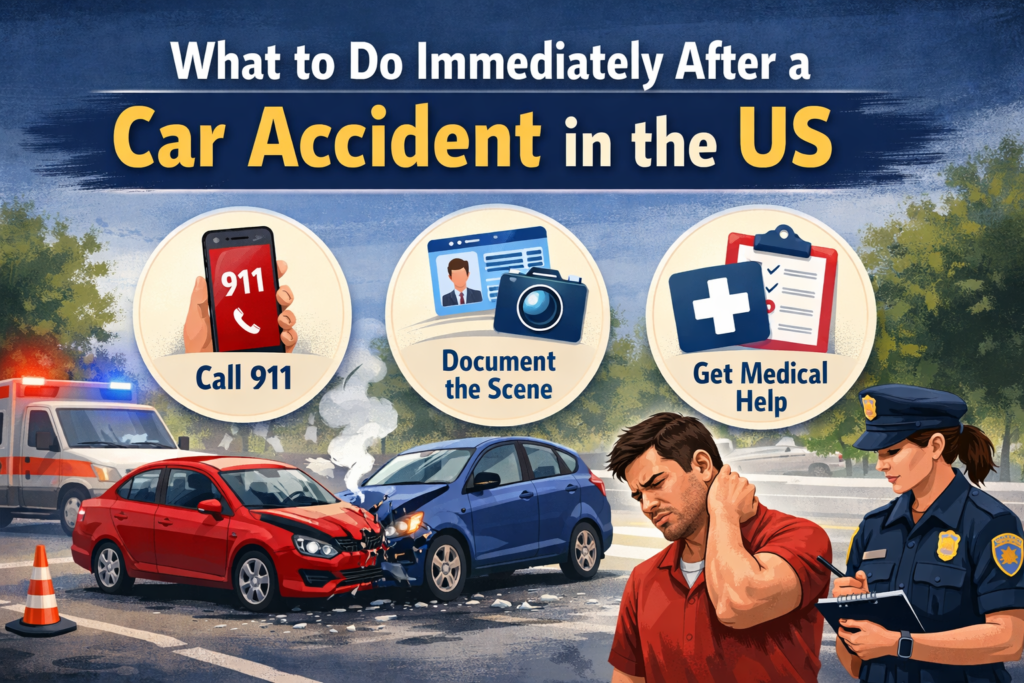
Learn exactly what to do immediately after a car accident in the US. Step-by-step 2026 guide with legal tips, insurance advice, real-life examples, and FAQs.
It happens in a split second.
One moment you’re cruising down the road, maybe heading home after a long day… and then—bam.
Your heart jumps. Your hands shake. Your mind goes blank.
“What just happened? What do I do now?”
If you’ve ever been in a car accident—or even just thought about it—you know that feeling. It’s overwhelming, confusing, and honestly a little scary.
Here’s the good news:
If you know exactly what to do in those first few minutes, you can protect your health, your money, and your legal rights.
Let’s break it down step-by-step, real simple, so you’re never caught off guard.
Why the First 10 Minutes After an Accident Matter
Those first few minutes are critical.
Why Acting Fast Is Important
- Prevent further accidents
- Get medical help quickly
- Gather evidence
- Protect your insurance claim
“What you do immediately after a crash can make or break your claim.”
Step 1 – Check for Injuries First
Nothing matters more than safety.
What to Do
- Check yourself for injuries
- Check passengers
- Check others involved
Call 911 If:
- Anyone is injured
- There’s major damage
- You’re unsure about injuries
“Even if you feel okay, adrenaline can hide injuries.”
Step 2 – Move to a Safe Location
If possible:
Move Your Vehicle
- Pull over to the side
- Turn on hazard lights
- Avoid blocking traffic
If You Can’t Move
- Stay inside with seatbelt on
- Wait for help
Step 3 – Call the Police
In most US states, this is required.
When to Call Police
- Injuries involved
- Damage over $1,000
- Hit-and-run
- Disputes
Why It Matters
- Creates official report
- Helps with insurance claims
Step 4 – Exchange Information
Stay calm and respectful.
Collect These Details:
| Information | Why It Matters |
| Name & phone | Contact |
| Insurance company | Claims |
| Policy number | Verification |
| Driver’s license | Identity |
| Vehicle details | Documentation |
“Don’t argue about fault at the scene.”
Step 5 – Document the Scene
This step is HUGE.
Take Photos Of:
- Vehicle damage
- License plates
- Road conditions
- Traffic signs
- Injuries
Pro Tip
“The more evidence you have, the stronger your claim.”
Step 6 – Talk to Witnesses
What to Collect
- Names
- Contact info
- Statements
Witnesses can make a big difference.
Step 7 – Notify Your Insurance Company
Don’t delay.
What to Tell Them
- Date & time
- Location
- What happened
- Photos
Learn how claims work here:
https://insurancesimplifiedusa.com/
Step 8 – Seek Medical Attention
Even if you feel fine.
Why It’s Important
- Hidden injuries
- Medical records help claims
Common Injuries:
- Whiplash
- Concussions
- Back pain
Step 9 – Understand Fault and Claims
Types of States:
| Type | Description |
| At-fault | Driver responsible pays |
| No-fault | Your insurance pays first |
Learn more:
https://insurancesimplifiedusa.com/
Step 10 – Avoid Common Mistakes
Mistakes to Avoid:
- Leaving the scene
- Admitting fault
- Not calling police
- Forgetting evidence
- Delaying claims
Real-Life Example
Case: David from Texas
- Minor accident at intersection
- Didn’t take photos
- Other driver changed story
Result:
- Insurance dispute
- Delayed claim
Lesson:
Always document everything.
What If It’s a Hit-and-Run?
Steps:
- Call police immediately
- Note vehicle details
- Look for witnesses
What If the Other Driver Has No Insurance?
Options:
- Uninsured motorist coverage
- File claim with your insurer
Key Takeaways
- Safety comes first
- Call police and document everything
- Never admit fault
- Notify insurance quickly
- Medical check is essential
FAQs (Very Important)
What should I do immediately after a car accident?
Check injuries, move to safety, call police, and document everything.
Do I need to call police for minor accidents?
Yes, in most cases.
Should I admit fault?
No—let authorities decide.
When should I contact insurance?
As soon as possible.
What if I feel fine after accident?
Still see a doctor.
What documents do I need?
License, insurance, photos, report.
What if the other driver is aggressive?
Stay calm and call police.
Can I leave the scene?
No, it’s illegal.
Conclusion
Car accidents are stressful—no doubt about it. But knowing what to do turns panic into control.
You can’t always prevent accidents—but you can control what happens next.
Stay calm. Stay smart. And follow these steps.
Because in those critical moments, the right actions can save you time, money, and a whole lot of stress.
Internal Resources
External Sources
- Insurance Information Institute
- NAIC
- DMV
- NHTSA
SEO Keywords
Primary Keywords:
- what to do after car accident US
- car accident steps explained simply
- accident guide 2026 US
Secondary Keywords:
- accident checklist US
- insurance claim steps car accident
- what to do after crash beginners